Early Life and Education
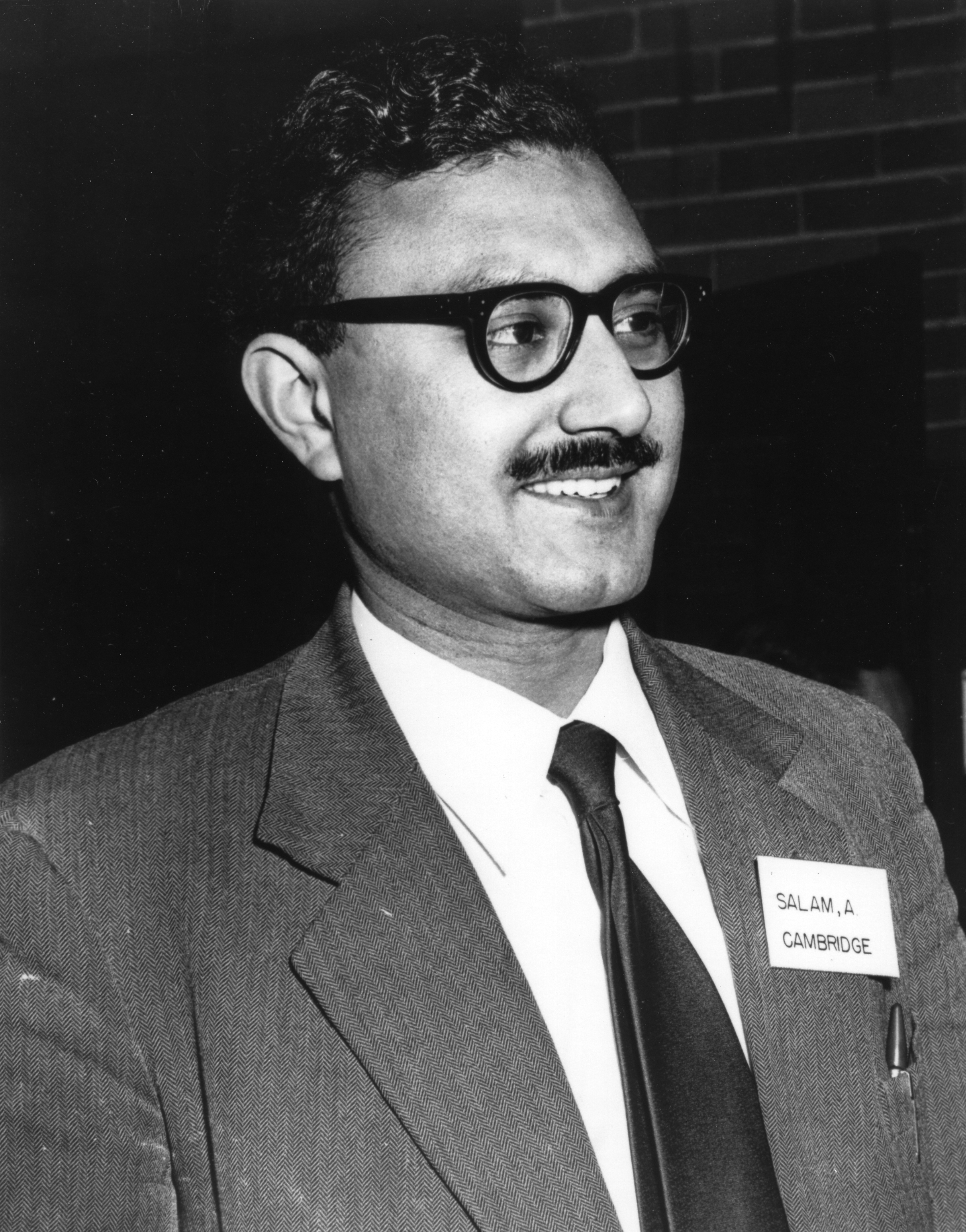
Muhammad Abdus Salam was born on January 29, 1926, in Jhang, a small town in the Punjab region of British India. He demonstrated an extraordinary aptitude for mathematics from a very early age. At just 14, he achieved the highest marks ever recorded for the matriculation examination at the University of Punjab, which brought him recognition across the province.
Salam completed his undergraduate studies at Government College, Lahore, where he excelled in mathematics and physics. In 1946, he received a scholarship to St. John's College, Cambridge. At Cambridge, he completed both his BA (1949) and PhD (1952) in theoretical physics. His doctoral thesis on quantum electrodynamics was groundbreaking and immediately attracted attention from the global physics community.
Scientific Contributions
Abdus Salam made fundamental contributions to theoretical physics. His most celebrated achievement was the development of the electroweak theory, which unified two of the four fundamental forces of nature — the electromagnetic force and the weak nuclear force — into a single theoretical framework called the electroweak interaction.
This theory, developed independently alongside Sheldon Glashow and Steven Weinberg, became a cornerstone of the Standard Model of particle physics. It predicted the existence of the W and Z bosons, which were later experimentally confirmed at CERN in 1983, validating the theory completely.
Salam also made contributions to the theory of supersymmetry, parity violation, and neutrino physics. He was a prolific researcher who authored hundreds of scientific papers throughout his career.
Sitara-e-Imtiaz Award (1958)
Abdus Salam was awarded the Sitara-e-Imtiaz — Pakistan's highest civilian honour — in 1958, recognizing his exceptional contributions to science and his role as a global ambassador for Pakistani intellectual achievement. The award came during a period when Salam was already establishing himself as one of the world's leading theoretical physicists.
The award acknowledged not only his scientific brilliance but also his tireless efforts to promote science education in Pakistan and the developing world. Throughout his life, Salam advocated for investment in science and technology as the path to national development.
Nobel Prize in Physics (1979)
In 1979, Abdus Salam was jointly awarded the Nobel Prize in Physics along with Sheldon Glashow and Steven Weinberg 'for their contributions to the theory of the unified weak and electromagnetic interaction between elementary particles, including, inter alia, the prediction of the weak neutral current.'
Salam became the first Pakistani — and the first Muslim from an Islamic country — to receive a Nobel Prize in the sciences. He wore traditional Pakistani dress — a shalwar kameez and turban — when receiving the prize from King Carl XVI Gustaf of Sweden, a moment of immense pride for Pakistan.
International Centre for Theoretical Physics (ICTP)
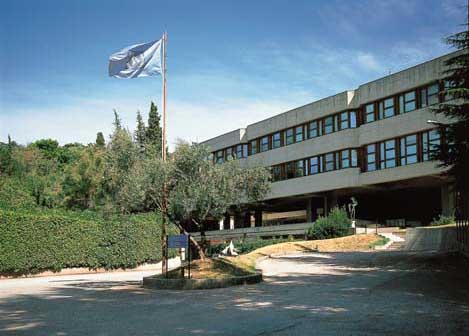
One of Salam's most enduring legacies is the founding of the International Centre for Theoretical Physics (ICTP) in Trieste, Italy in 1964. Salam established the ICTP out of a deep conviction that scientists from developing nations deserved access to world-class research facilities and collaboration opportunities.
The ICTP has since trained tens of thousands of scientists from developing countries and remains one of the world's leading centres for advanced scientific research. It was renamed the Abdus Salam International Centre for Theoretical Physics in his honor after his death.
Legacy and Impact
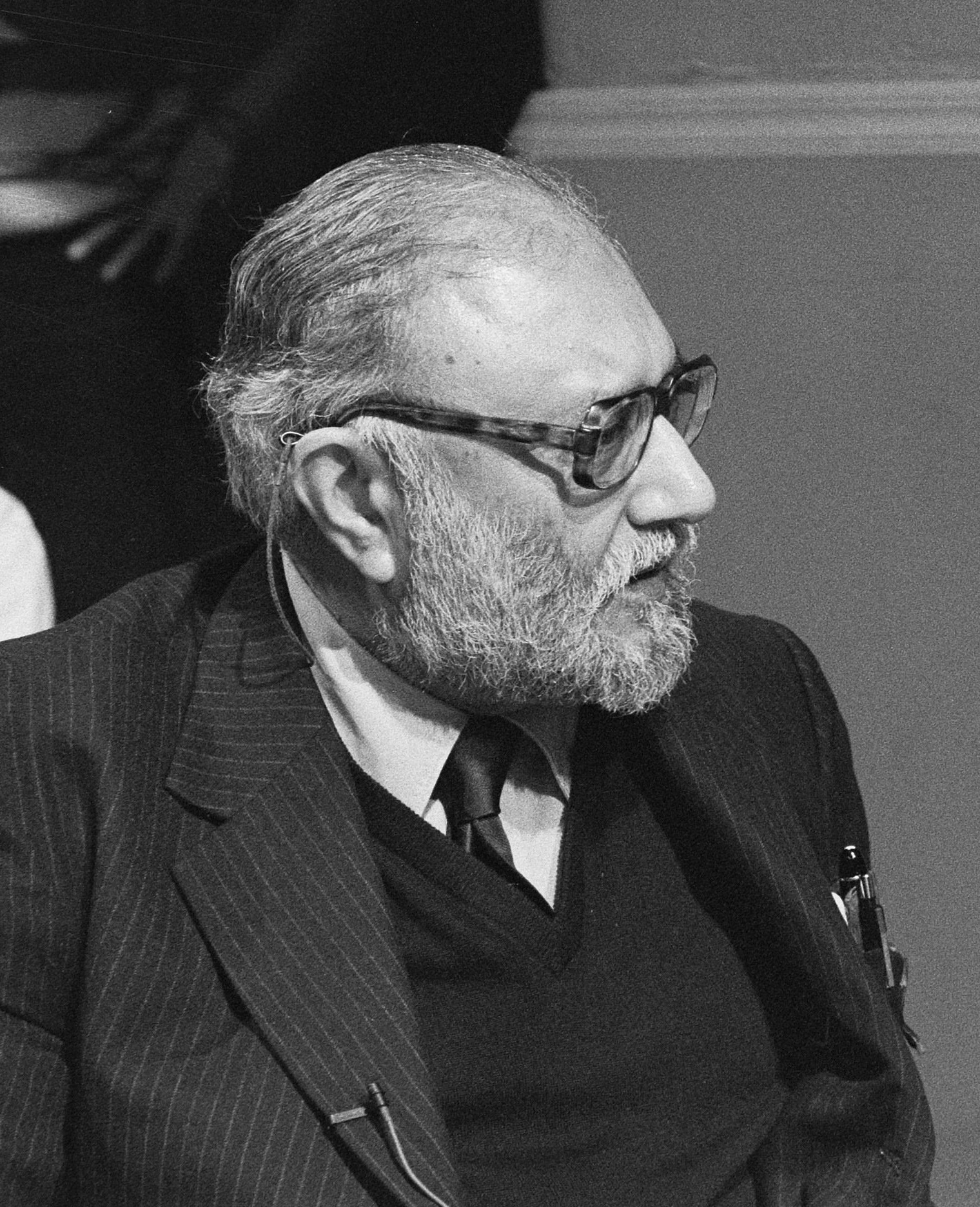
Abdus Salam passed away on November 21, 1996, in Oxford, England, after battling progressive supranuclear palsy for over a decade. Despite his illness, he continued to advocate for science in the developing world until the very end.
His legacy is immeasurable. He remains the only Pakistani Nobel laureate in science, and his life continues to inspire generations of Pakistani scientists and students. Postage stamps, universities, research institutes, and fellowships across Pakistan bear his name. The Abdus Salam School of Mathematical Sciences at Government College University Lahore continues his vision of nurturing mathematical talent in Pakistan.
In 1998, the Pakistani government placed a monument to him in his hometown of Jhang. His work on the Standard Model of particle physics remains foundational to modern physics and is taught in universities worldwide.
References
- Fraser, Gordon (2008). Cosmic Anger: Abdus Salam — The First Muslim Nobel Scientist. Oxford University Press.
- Abdus Salam Nobel Prize Autobiography (1979). Nobel Foundation. https://www.nobelprize.org/prizes/physics/1979/salam/biographical/
- Kibble, T.W.B. (1997). Abdus Salam: A Biographical Memoir. The Royal Society.
- Pakistan Government Gazette, Sitara-e-Imtiaz Award List (1958).
- ICTP Official History. https://www.ictp.it
- Wikipedia — Abdus Salam. https://en.wikipedia.org/wiki/Abdus_Salam
Categories
Photo Gallery