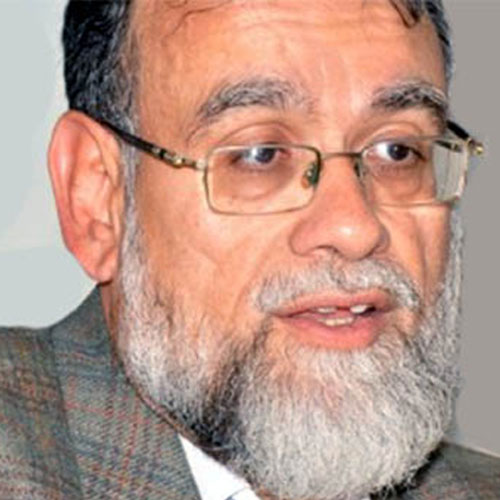
Early Life and Education
Abdul Bari Khan was born in 1961 in Karachi, Pakistan. He completed his MBBS from Dow Medical College, Karachi in 1986, where he also earned his FCPS in Cardiac Surgery from the College of Physicians and Surgeons Pakistan.
During his student years at Dow Medical College, Khan was deeply committed to social causes. He led the Patient Welfare Association (PWA) blood bank and spearheaded a grassroots movement to establish voluntary blood donation across Karachi — replacing a corrupt system in which paid drug addicts served as blood donors. A colleague recalled of his student days: "He spent all his time dissecting — always cutting, cutting, and cutting." His discipline and purpose were evident from the very beginning.
The 1987 Bomb Blast That Changed Everything
In 1986, a bomb blast in Soldier Bazaar, Karachi overwhelmed the emergency ward of Civil Hospital, exposing the catastrophic inadequacy of Pakistan's public healthcare system. Dr. Khan and his medical colleagues from the Patient Welfare Association witnessed the chaos firsthand. He recalled: "It was horrific. It was then that we realised just how ill-equipped the emergency ward of the Civil Hospital was."
In response, Dr. Khan and three colleagues launched a massive door-to-door and classroom fundraising campaign across Karachi. They raised Rs 3,274,500 from the public and used it to completely renovate and modernise Civil Hospital's Accidents & Emergency ward, inaugurated in July 1987.
At the opening ceremony, the four young doctors made a pledge: they would one day build their own hospital — one that treated every patient for free. That vow would take twenty years to fulfil.
Founding of Indus Hospital (2007)
In 2005, the Islamic Mission Trust donated a non-functional hospital building on a 20-acre site in Korangi, Karachi to Dr. Khan and his colleagues. After two years of renovation, Indus Hospital opened its doors in 2007 — fulfilling the pledge made two decades earlier.
From day one, Dr. Khan enforced an absolute, non-negotiable principle: every patient receives care completely free of charge. No patient is ever asked for money. No billing counters exist for patients. The hospital runs entirely on donations from individuals, corporations, and philanthropists. It was also Pakistan's first paperless hospital and first cashless hospital, built on fully electronic records from the very first day.
Within its first few years, Indus Hospital had treated over 600,000 patients at zero cost — a figure that grew into millions as the network expanded.
Indus Hospital & Health Network — Scale and Impact
What began as a single hospital in Korangi grew into a national institution. Rebranded as the Indus Hospital & Health Network (IHHN), the organisation today operates:
12 hospitals across Pakistan · 4 Regional Blood Centres · 4 Physical Rehabilitation Centres · 36 primary care locations · Pakistan's largest Paediatric Oncology Centre · The Indus University of Health Sciences · The Indus Hospital Research Center · A full Postgraduate Medical Education Program.
IHHN pioneered the use of mobile and GPRS technologies for remote community treatment and established a major MDR-TB (Multi-Drug-Resistant Tuberculosis) control program in collaboration with the National TB Program — one of the most significant non-government TB treatment programmes in Pakistan. Over 2.3 million patients have been served at zero cost to date.
Awards and Recognition
Dr. Abdul Bari Khan's contributions have been recognised by Pakistan and international institutions alike:
Eisenhower Fellowship (2004) — Awarded by the Eisenhower Fellowships, USA. He used the fellowship to visit leading American cardiac centres, build partnerships with US surgeons, and establish medical supply connections that benefitted IHHN.
Tamgha-e-Imtiaz (2015) — Pakistan's 4th-highest civilian honour, conferred on Pakistan Day (23 March 2015) for his contributions to healthcare.
Hilal-e-Imtiaz (2019) — Pakistan's 2nd-highest civilian honour, awarded for his extraordinary lifelong service to healthcare and humanity. The Hilal-e-Imtiaz ranks above the Sitara-e-Imtiaz and is among the most prestigious awards the Government of Pakistan can bestow.
Asian Leadership Award — Lifetime Achievement (2019) — Awarded by the Asian Association of Management Organizations at a ceremony in Kuala Lumpur, Malaysia, presided over by Prime Minister Tun Dr. Mahathir Bin Mohamad.
Lifetime Achievement Award (2019) — Awarded by the Management Association of Pakistan (MAP) for exemplary social work and humanitarian service.
DOGANA Hall of Fame — Inducted by the DOW Graduate Association of North America in recognition of choosing a lifetime of humanitarian service over private medical practice.
National Hero (2025) — Named at the Pakistan Health Care Summit 2025.
Legacy
Dr. Abdul Bari Khan served as the founding CEO of IHHN from 2007 to 2022 — fifteen years during which he transformed a single donated building into Pakistan's largest free healthcare network. In 2022, he transitioned to the role of President of IHHN, continuing to guide the organisation's strategic vision.
His life story — from a medical student witnessing a bomb blast in 1986 to building a multi-hospital network serving millions — represents one of the most remarkable examples of purpose-driven institution-building in Pakistan's history. Dr. Khan has often said that the founding principle remains unchanged: "Every patient deserves dignity and quality care, regardless of their ability to pay."
He is married to a physician and has three children. Despite the enormous scale of his work, he is known for remaining personally accessible and deeply involved in patient care at Indus Hospital.
References
- Wikipedia — Abdul Bari Khan. https://en.wikipedia.org/wiki/Abdul_Bari_Khan
- Dawn. (July 2012). Profile: Intertwining Humanity and Medicine. https://www.dawn.com/news/734366
- Wikipedia — Indus Hospital and Health Network. https://en.wikipedia.org/wiki/Indus_Hospital_and_Health_Network
- Indus Hospital & Health Network — Official Website. https://indushospital.org.pk
- DOGANA Hall of Fame — Dr. Abdul Bari Khan. https://dogana.org/halloffame/
- Wikipedia — Hilal-i-Imtiaz Recipients List. https://en.wikipedia.org/wiki/Hilal-i-Imtiaz
- CEO IHN receives Hilal-e-Imtiaz — Indus Health Network UK. https://indushospital.org.uk/news/ceo-ihn-receives-hilal-e-imtiaz/